Master the
RCPA BPS exam
Build deep, exam-ready understanding across all 13 sections of the RCPA Basic Pathological Sciences (BPS) syllabus.

Perfect for:
- Students and doctors preparing for the RCPA BPS exam
- Doctors studying pathology as part of postgraduate primary examinations


eMedici Is Trusted by 80,000+ Students, Doctors, and IMGs









Question Bank
Prepare across the full BPS syllabus
-
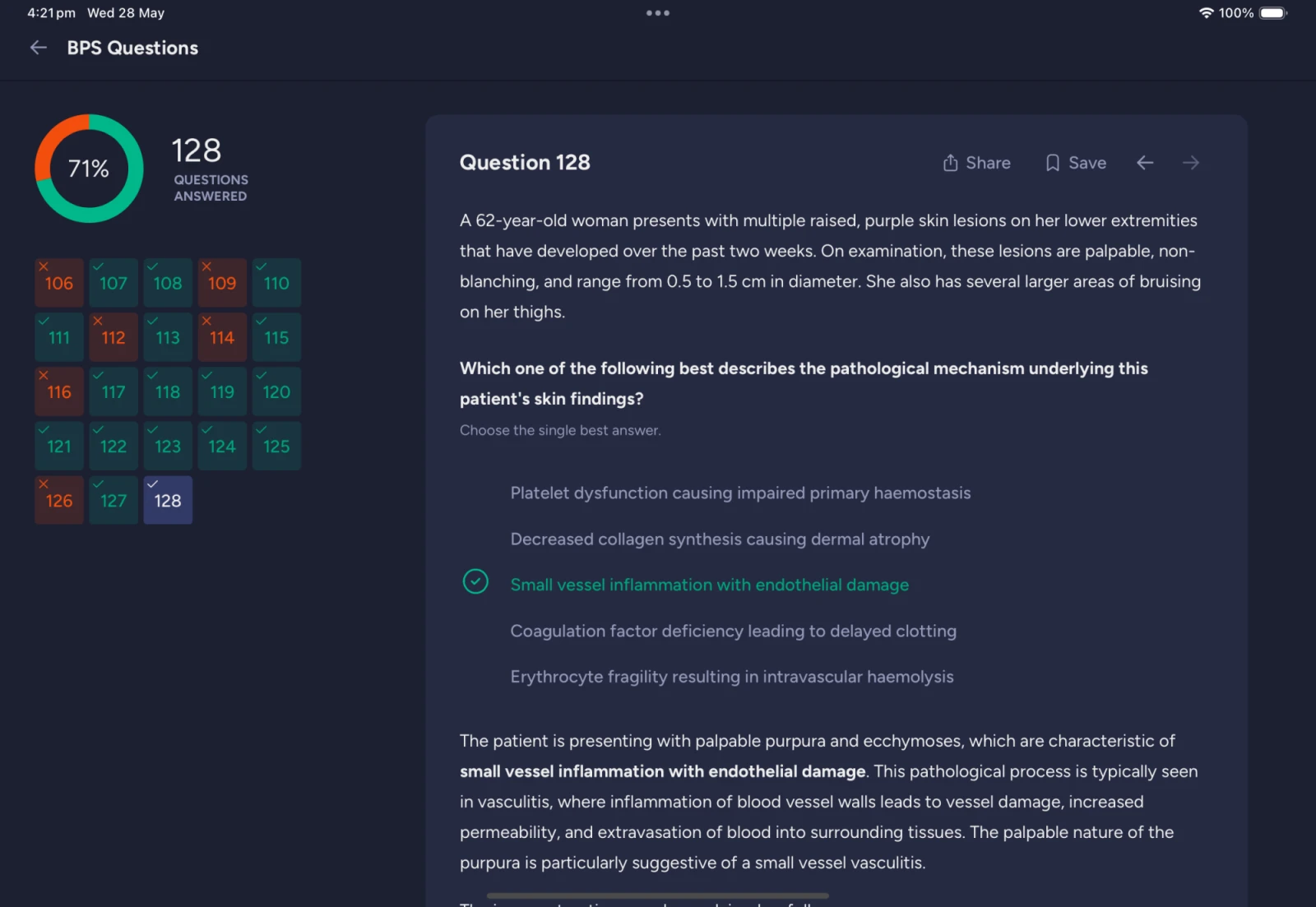
400+ MCQs with detailed explanations
-
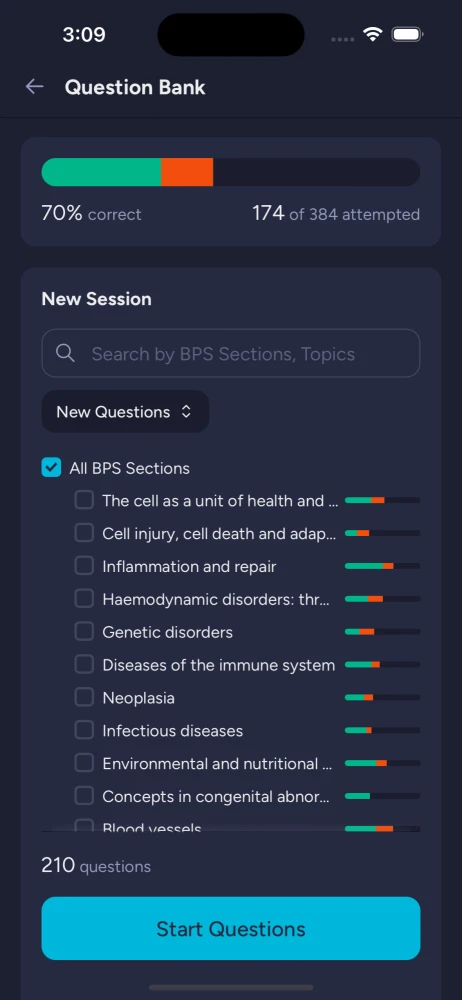
Coverage of all 13 sections of the RCPA BPS syllabus
-
Reviewed by successful BPS candidates including a specialist FRCPA

Module/topic search
BPS section name, Neoplasia, Research concepts, or cellular aging – filter questions by syllabus section or by topic.
Explain, highlight, revise
Every question includes a full referenced explanation, reviewed by topic experts, so you can highlight the details that matter and come back to them later.
High-yield syllabus takeaways
Consolidate the mechanisms, definitions, and pathology principles that recur across the BPS syllabus.
Mock Exam
Know where you stand across the syllabus
-
Comprehensively blueprinted 100-item Mock Exam
-
Detailed explanatory feedback, referenced and reviewed by experts
-
Individual and cohort comparison data
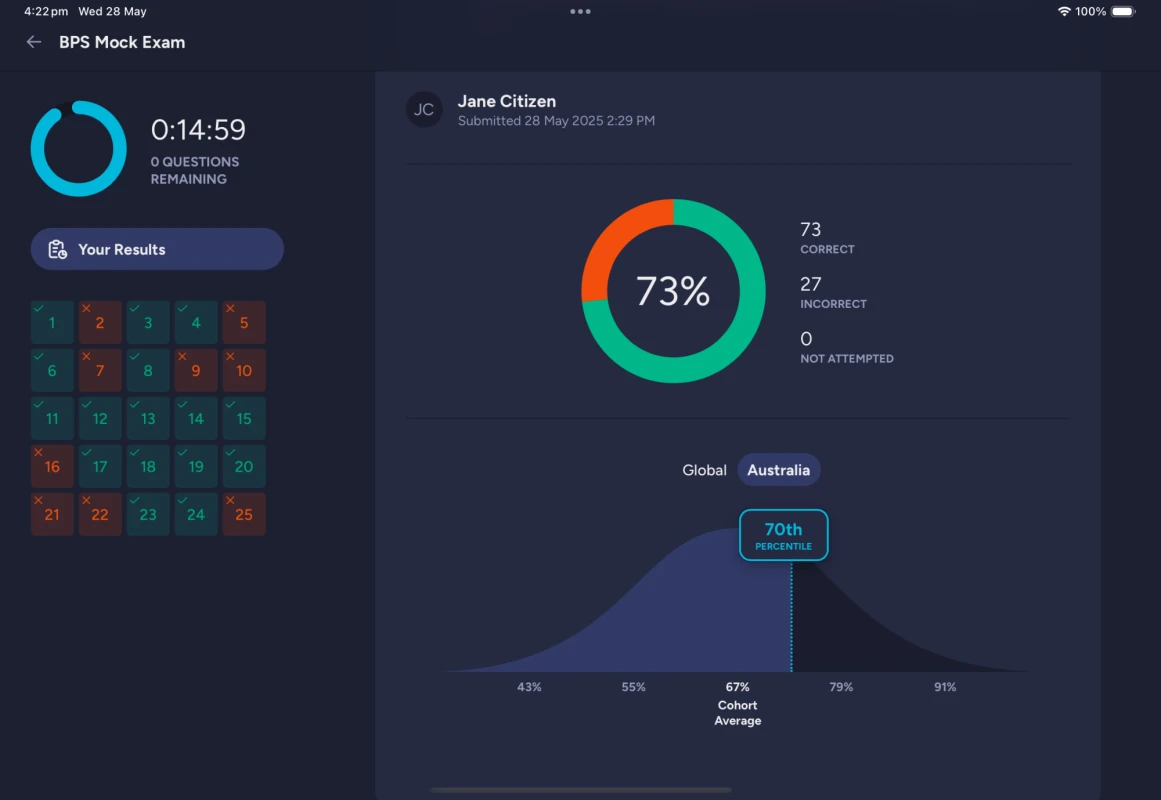
Cohort comparisons
Compare your Mock Exam result with the wider cohort so you can see how your preparation is tracking.
Performance breakdown
Review performance across BPS syllabus sections so you know where to focus your next revision block.
Performance Breakdown
- 🫧 The cell as a unit of health and disease
-
 Cell injury cell death and adaptations
-
 Inflammation and repair
-
 Haemodynamic disorders: thromboembolic disease and shock
-
 Genetic disorders
-
 ️ Diseases of the immune system
Complete explanations
Review every question with detailed explanatory feedback, references, and expert-reviewed pathology reasoning.
The patient has petechiae (pinpoint haemorrhages 1-2 mm in size) due to severe thrombocytopenia. The pathophysiology involves failure of platelet adhesion to damaged endothelium. Normally, platelets rapidly seal minor defects in capillaries that occur from everyday minor trauma, particularly in skin and mucosal surfaces. With insufficient platelets, these minor capillary ruptures cannot be sealed, resulting in petechial haemorrhages.
Pricing
Serious prep. Simple pricing.
- 400+ MCQs with detailed explanations
- Fully blueprinted 100-item Mock Exam
- Coverage of all 13 sections of the RCPA BPS syllabus
- Reviewed by successful BPS candidates including a specialist FRCPA
- Recommended references on every item
- High-yield learning points
- iOS, Android, and Web apps
All prices are in Australian dollars (AUD).
What’s included in the Basic Pathological Sciences free trial?
The Basic Pathological Sciences free trial includes access to a small selection of sample content in the Question Bank.
What content is covered in Basic Pathological Sciences?
The BPS resource covers all sections of the RCPA BPS syllabus.
Who is Basic Pathological Sciences suitable for?
The content is pitched at postgraduate level, with content across a range of difficulty. The resource is suitable for students and doctors preparing for the RCPA BPS examination.
I'm a student - can I get a discount for Basic Pathological Sciences?
Yes, we are offering a discount to students. Please email support@emedici.com with your details and evidence that you are a current student who is enrolled to sit the BPS exam.
eMedici is an Approved CPD Provider - what does this mean?
eMedici is an Approved CPD Provider with CPD Australia, so activities you complete on our platform are considered pre-approved when uploaded to your CPD Australia profile with appropriate evidence. Here are the ways you can earn and claim CPD points with eMedici:
Complete eMedici learning activities and take a screenshot of your completion as evidence. You can then upload this screenshot to your CPD Australia profile and log the appropriate activity duration.
Attend our Webinars. After attending, you can download a CPD Attendance Certificate using the link at the end of the presentation, which you can also upload to your CPD Australia profile. If viewing the webinars on-demand via YouTube, you can access the link to download your CPD Attendance Certificate in the video description.
Make sure to keep your completion screenshots or attendance certificates as proof to claim your CPD points.
How often is eMedici content updated?
All content is reviewed and referenced by clinicians and educators, in line with the latest evidence-based guidelines. Updates to content are made on a regular, ongoing basis in response to changes in guidelines, statistical data, and user feedback.
How is eMedici content designed in relation to exam formats?
When developing eMedici content, we take a range of factors into account, including exam format, topic coverage, subject matter, level of difficulty, and expected clinical pitch. Our aim is to ensure the content is relevant, appropriately pitched, and aligned with what candidates are commonly assessed on in Australian medical examinations.
Our priority is to provide strong educational value. This means that while questions are exam preparation relevant, they may not appear identically to how a question is written or presented in a specific exam. Instead, items are deliberately designed to build core knowledge, test key concepts, and explain clinical reasoning in a way that supports deeper understanding.
Will my subscription automatically renew?
No, you will only be subscribed once-off for the period you select. You can extend your subscription at any time before or after your subscription expires.
-
 Dr Toby ZernerChief Technology Officer
 -
 Dr Hannah PhamMedical Educator / General Practitioner
 -
 Prof Peter DevittConsultant, Royal Adelaide Hospital
 -
 Mr Jacob Waye-HarrisChief Legal Officer
 -
 Dr Stefan Court-KowalskiICU Registrar, Royal Adelaide Hospital
 -
 Dr Karanjot LallPaediatric Registrar
 -
 Dr Addison DavisRural Generalist, Patrick Street Clinic
 -
 Dr Neysan SedaghatGeneral Practitioner
 -
 Dr Krystal GreenGeneral Practitioner
 -
 Dr Sarah WilkinsonEmergency Medicine Registrar / Discipline Editor
 -
 Dr Jun Yen NgFellow, Haematology, Canberra Hospital, Australian National University
 -
 Dr Joshua TavernerGeneral Medicine Registrar, Western Hospital
 -
 Dr Stephanie DawsonGeneral Practitioner
 -
 Dr Jess SullivanIntern, SA Health
 -
 Dr Karan VarshneyMedical Intern, South West Healthcare
 -
 Dr Marita BolicIntern, Queensland Health
 -
 Darren TanFinal-Year Medical Student at Monash University
 -
 Dr Theodore VelkosResident Medical Officer, Royal Adelaide Hospital
 -
 Dr Dylan BarnettGeneral Surgery Registrar, Royal Adelaide Hospital
 -
 Dr Belinda LoweStaff Specialist O&G
 -
 Dr Georgia Smithson-TomasEndocrinology Advanced Trainee, Queensland Health
 -
 Marc EskanderOptometrist & Medical Student
 -
 Dr Roger ParnisPaediatric Doctor and Educator
 -
 Dr Cristina ValeroConsultant General Practitioner, University of Adelaide
 -
 Dr Jarrad HopkinsRenal Registrar, Royal Adelaide Hospital
 -
 Dr Victoria LangtonBasic Physician Trainee, Royal Adelaide Hospital
 -
 Dr Shilsha NinanPaediatric Registrar, Advanced Training in General Paediatrics and Community Child Health
 -
 Abhilash DhruvaMedical Student
 -
 Braden TonakieParamedic & Medical Student
 -
 Kevin KimMedical Student
 -
 Tony DiepMedical Student
 -
 Dr Callum DeakinChild and Adolescent Psychiatrist, Women's and Children's Hospital
 -
 Dr Darren ForemanUrologist, Flinders Medical Centre
 -
 Dr Matthew ChoDermatologist
 -
 Prof John CromptonOphthalmologist, University of Adelaide
 -
 Dr Alexander HowesPaediatric Emergency Medicine Consultant, Women's and Children's Hospital
 -
 Dr Sanghamitra GuhaEndocrinologist, Royal Adelaide Hospital
 -
 Prof Hubertus JersmannRespiratory Physician, University of Adelaide
 -
 Dr Mike SmithConsultant Orthopaedic Surgeon, University of Adelaide
 -
 Dr Prue StandenObstetrician and Gynaecologist, St Vincent's Hospital
 -
 Dr Andrew MorrisConsultant Orthopaedic Surgeon, University of Adelaide
 -
 Prof Robert FitridgeConsultant Vascular Surgeon, University of Adelaide
 -
 Dr Steven KnoxConsultant Radiologist, Royal Adelaide Hospital
 -
 Prof Christian Hamilton-CraigConsultant Cardiologist, University of Queensland
 -
 Dr Tharani KrishnanMedical Oncologist, Flinders Medical Centre
Built by Australian doctors.
Backed by Australian guidelines.
Our content is crafted by clinicians and educators who know the Australian system – so you’re not just prepared, you're practising with confidence.
-
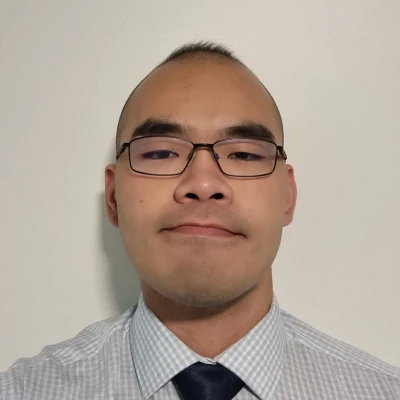 Dr Jun Yen NgJun is a Senior Editor for eMedici, a clinical and laboratory haematologist, and works as a fellow in the Canberra Region Cancer Centre.
Dr Jun Yen Ng
Jun is a Senior Editor for eMedici. He is a clinical and laboratory haematologist, working as a fellow in the Canberra Region Cancer Centre. He is also a PhD candidate at the Australian National University. He has a strong interest in medical education and is passionate about the role of pathology as a cornerstone of knowledge across multiple specialties. Recognising the importance of a solid foundation in this area, he played an active role in the development of the BPS question bank to support students and trainees. Outside of work, he enjoys going to the gym, reading literary fiction, and playing the piano.
-
 Dr Theodore VelkosTheodore is a Discipline Editor for eMedici and completed the Basic Pathological Sciences Examination in 2022.
Dr Theodore Velkos
Theodore is a Discipline Editor for eMedici. He completed his Bachelor of Medicine and Bachelor of Surgery at the University of Adelaide and is currently working as a resident medical officer for the Central Adelaide Local Health Network. Having completed the Basic Pathological Sciences Examination in 2022, he was motivated to develop a resource which would help others with their learning. He enjoys studying the application of pathological sciences in clinical medicine, with special interests in oncology, infectious diseases, immunology and environmental health. Outside of work, he enjoys baking and photography as hobbies.
-
 Dr Karan VarshneyKaran (MBA, MD, MPH) is a Junior Doctor who completed the Basic Pathological Sciences Examination in 2024.
Dr Karan Varshney
Karan is an Associate Editor & Project Coordinator for eMedici. He is a currently a medical intern at South West Healthcare - but prior to becoming a doctor, has worked extensively in diverse health care settings such as a children's hospice, a neuropsychiatric ward, and a crisis/suicide hotline. With two previous Masters' degrees in Public Health and Business Administration, he has extensive experience in health research and epidemiological work. Karan has a keen fascination in understanding how private and public entities can work together to effectively address the most significant health issues of our era. Karan has been involved with eMedici since 2022, while he was a medical student. In the spare time that he has available, Karan loves to explore language learning, and to explore his cultural and spiritual roots.
Karan on the Basic Pathological Sciences (BPS) exam:
In 2024, I decided to sit the BPS Exam, and I have to say that studying and preparing for this exam was a fulfilling experience. However, it was also a tiring process (even though it definitely didn't need to be!). I found that when preparing, there was a clear lack of adequate available resources to assist with studying. As a result, preparation for the exam entailed reading (and re-reading) hundreds of pages in a textbook in a grossly inefficient manner that got quite repetitive, quite fast. With this in mind, I strongly feel that eMedici's BPS resource can serve as a valuable means for one to get the most out of the studying process in terms of both efficiency, and overall enjoyment in the learning process. We have spent many hours carefully designing these materials in a manner that tests important concepts directly from the BPS syllabus, thereby ensuring the maximum possible study value. I truly hope that whoever uses this material will find great benefit in learning for this exam, while also hopefully having some fun along the way!