 IMG Ready MCQ: Your Guide to AMC MCQ Exam Preparation
My Top 9 Tips for the AMC CAT MCQ: You, the Exam, and Australia

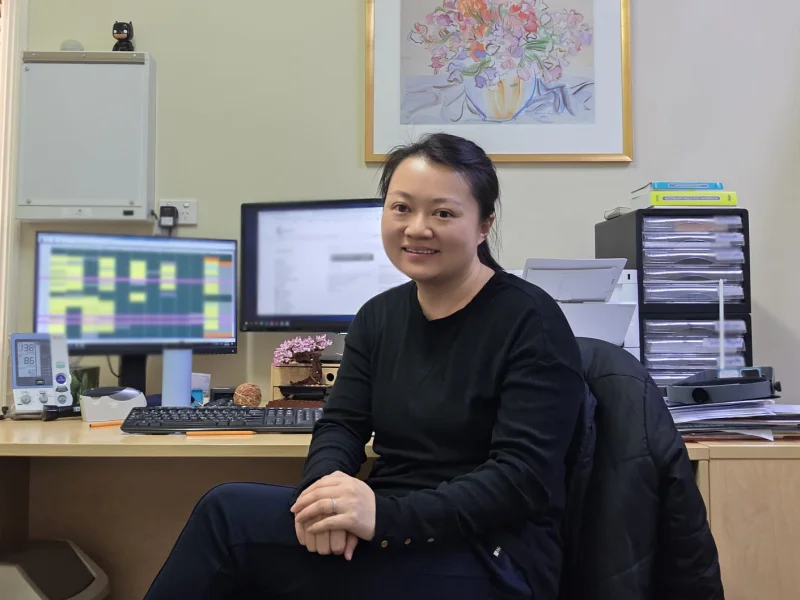
Dr Neysan Sedaghat
General Practitioner

Like many international medical graduates, my own journey into Australia had plenty of ups and downs. The hardest part wasn't the medicine. It was relearning it in a second language, under a different set of guidelines, with no clear map of where I was going. It took me longer than planned, but I got there. Today I'm a GP fellow (FRACGP) and a senior lecturer at the University of Western Australia.
Passing the AMC CAT MCQ (opens in new tab) isn't about money, shortcuts, or memorising your way through. It's about understanding medicine well enough to apply it: to real patients, in the Australian context, under exam conditions. Here are my top nine tips on how to get there, grouped around the three things that really shape the final result: you, the exam, and Australia.
The candidate behind the number
Before any advice about guidelines or questions, it's worth pausing on something we tend to skip: no two AMC candidates are the same. You arrive with your own training, your own clinical experience, and your own gaps. The first job is to know your own starting point.
1. Diagnose before you prescribe
Don't guess your weak spots, measure them. Before you open a single textbook, sit a timed set of questions across every topic. The 210 free AMC example questions (opens in new tab) that come with your exam authorisation are a fair place to start. Scoring yourself subject by subject turns a vague sense of dread into a ranked to-do list.
Then be honest about your circumstances: how long since you last studied this material, how comfortable you are in English, and how much time you can truly protect each week. Once you have a clear picture, pick your exam date and count backwards, dividing topics across the weeks you have and booking study slots like clinic shifts. The whole plan should be built on those honest answers.
2. Triage your topics
Resist the temptation to give every topic equal time. The AMC favours common conditions, so mastering diabetes and thyroid disease will serve you better than chasing rare pituitary tumours. Layer your own gaps on top: a topic that's both high-yield and shaky for you is exactly where your hours belong.
And once you've covered an area, don't bury it. Spaced repetition, flagging questions you got wrong and letting them resurface a week or two later, is how knowledge sticks. Spending a fortnight on cardiology and never reopening it is how it quietly leaks away.
3. Stress management is part of the curriculum
A stressed mind recalls less of what it already knows, so managing anxiety is part of the method, not a soft optional extra.
- Build one real rest day into each week and a firm stop each night.
- Run full timed mocks so exam conditions start to feel familiar rather than frightening.
- In the final fortnight, mute the forums. Reading other people's panic will get to you.
Train for the exam, not just the medicine
You can know a great deal of medicine and still find the AMC hard, because the exam tests something more than just knowledge. It asks whether you can apply what you know, quickly, under real time pressure. Closing the gap between what you know and what the exam asks is most of the work, and the good news is it's very learnable.
4. Stop passively reading, start understanding and answering
The single biggest shift most candidates need to make is to stop re-reading and start answering. Retrieving an answer from memory, getting it wrong, and then reading why does far more for retention than passively reviewing notes ever will. Spend the bulk of your study working through questions and their explanations, not highlighting textbooks.
5. Learn the why, not just the what
This is where shortcuts fail. If you memorise that the answer is "amoxicillin", a small change in wording will catch you out. If you understand why amoxicillin suits that patient, you can answer the same idea however it's worded. Memorise the answer and you can only pass that one question. Understand it and you can answer any variation.
6. Read the last line carefully
The exam consistently tests whether you can tell apart the first investigation you'd order, the most appropriate one overall, and the one that confirms the diagnosis, or whether it's asking for the next step in management. These are often different answers to nearly identical-looking questions.
Take a woman with seven weeks of amenorrhoea and mild lower abdominal pain. The first investigation is a pregnancy test. If it's positive, transvaginal ultrasound is the most appropriate investigation to locate the pregnancy. But if she becomes hypotensive and tachycardic, the next step isn't a test at all: it's resuscitation and urgent gynaecology review. Train yourself to spot which is being asked before you look at the options.
Think like an Aussie
This is the part that catches most of us out. The conditions are familiar, but the guidelines, the priorities, and the way care is organised here may not be. The good news is that this is also one of the most fixable gaps. The question worth keeping in mind is a simple one: what would a safe doctor do here, specifically in Australia?
7. Translate your knowledge
You can be an excellent doctor and still get questions wrong, because the exam is rooted in Australian clinical practice. Cervical cancer screening, antenatal care, vaccination schedules, first-line antibiotics: all of these can differ from what you trained on. When you study a topic, check what the Australian guideline says. Australian sources such as RACGP guidelines (opens in new tab), Therapeutic Guidelines (eTG) (opens in new tab) and the Australian Immunisation Handbook (opens in new tab) are worth using early and often, rather than overseas textbooks.
Don't try to read every single guideline. There are easily more than 150! Go deep on the ones that recur: diabetes, hypertension, asthma, COPD, osteoporosis, antenatal care, common infections, immunisation, and screening. Knowing the common things thoroughly beats knowing everything superficially and badly.
8. Public health and ethics are reliable marks, don't skip them
Screening programs, immunisation schedules, notifiable diseases, and sexual health reward understanding principles rather than memorising facts. Learn the Australian approach once and you have some of the most consistent marks in the exam.
The same goes for ethics and professionalism: consent, confidentiality, capacity, and mandatory reporting come up regularly and are very learnable. They test whether you know the right thing to do, not obscure facts. The Medical Board of Australia's code of conduct, Good medical practice (opens in new tab), is a solid grounding.
9. Understand Aboriginal and Torres Strait Islander health
Before coming to Australia I knew very little about the history and rich cultures of Aboriginal and Torres Strait Islander peoples. First Nations health is a stated AMC priority and it runs right through the exam, reflecting its place in Australian healthcare. It must be learned as a core tenet of good clinical practice and cannot be skimmed. Culturally safe communication and the specific health priorities of First Nations communities are central to Australian healthcare. The AMC's resources for international medical graduates (opens in new tab) are a good place to start.
After the exam
Passing the AMC CAT MCQ is a real achievement, but it's one step on a longer road. That road leads to many places: hospital specialties, general practice, rural and remote medicine. Be honest with yourself and your circumstances, study in a way that respects how learning works, and start thinking like an Australian doctor.
In the interest of full disclosure, I should mention that I work with eMedici, so take this with that in mind. IMG Ready MCQ is built around everything I'm suggesting: made by Australian doctors and educators, anchored in Australian guidelines, and taught through questions and cases with detailed explanations, so you learn by applying and understanding rather than memorising. If that's the way you want to prepare, you'll find it's designed for you.
You're not an outsider to be processed. You're working toward being an integral, valued part of Australia's medical community, with something of your own to enrich it.
Start preparing with IMG Ready MCQ
IMG Ready MCQ is built around the approach in this guide. You learn by answering questions and reading detailed explanations, check your knowledge against Australian guidelines, and build stamina and pacing with timed Mock Exams. A structured Study Roadmap helps you plan your weeks around the topics that matter most for you.
For a full tour of what's included, read our guide to IMG Ready MCQ.
Neysan is an Education and Engagement Lead at eMedici. He is a Perth-based General Practitioner and Fellow of the Royal Australian College of General Practitioners (FRACGP). He completed his medical degree at Universidad de Concepción in Chile and, after relocating to Australia in 2020, undertook training in regional Victoria and New South Wales.
Neysan is a Senior Lecturer at the University of Western Australia with a strong interest in academic general practice and medical education. He is passionate about supporting high-quality learning and fostering meaningful educational communities. Outside of work, he enjoys reading and spending time with his wife and two energetic boys.
Discover More
IMG Ready MCQ: Your Guide to AMC MCQ Exam Preparation
 ACEM Primary Exam Prep: One Question at a Time

 Getting Into the Groove of GP Registrar Life


 GP Exam Prep: What Actually Helps